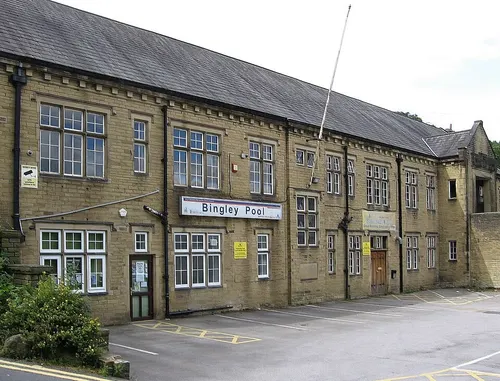


Strap in and grab your favourite beverage. There’s a lot to lay out in this second piece covering the Squire Lane project and Reform’s preference to send back a government grant of £20 million.
In cancelling the Squire Lane project, the minority Reform-led council is performing a high-wire act that could go disastrously wrong. Here is how it stacks up…or not.
To justify cancelling the long-awaited Squire Lane Sports and Leisure Facility, Bradford Council’s Executive leaned on a single word: affordability. Facing a continued need to rely on Exceptional Financial Support, the Executive framed the cancellation as a hard-headed, fiscally responsible act of preservation.
At one level, the affordability argument makes sense. The Council’s track record for on-budget delivery is at best patchy. The Executive is right to be sceptical about the Council ability to deliver a large-scale project of this kind on even an enlarged budget. But in doing so, they’re ignoring strong evidence to the contrary and stepping aside from their duty to consider health issues. In short, they are at risk of heightening the risk, not mitigating it.
The bigger problem is that the decision to cancel Squire Lane is not a saving; it is a textbook exercise in short-termism that locks local taxpayers into an immediate multi-million-pound write-off and guarantees a massive strategic financial penalty in the future.
The reserve account magic trick
The most glaring mathematical contradiction of the cancellation lies in the use of the Council’s revenue reserves. The Executive claimed it could not afford any of the cost associated with an approximately £12 million requirement to proceed with construction, despite the fact that doing so would immediately secure a state-of-the-art £32.9 million asset and draw down £20 million in external government grant funding.
The Cover Report explicitly confirms that the unrecoverable, abortive costs of cancelling the project will result in an immediate revenue write-off of £ 5.4 million. Cllr Davies tried to frame the spend as fiscal mismanagement, but was reminded that previous Executive decisions had covered it. Strategic Director of Growth David Shepherd clarified that while actual capital spend stood at £4.9m at the financial year-end, the overall hit reached £5.4m due to outstanding commitments under the necessary Pre-Construction Service Agreement (PCSA) required to reach RIBA Stage 4. Council Leader Stephen Place tried to frame the additional £0.5 million as a sudden ballooning cost, but he too was corrected when told that the amounts were already budgeted and not an unplanned overspend.
Steven Mair, the council’s chief finance officer, reiterated to the committee that this entire £5.4 million dead loss must be charged directly to the Council’s revenue reserves:
“We have no option but to use reserves. We will obviously, reduce our reserves by 5.4 million...It simply means we have 5.4 million less.”
The fiscal hypocrisy is complete: reserves are deemed too depleted to cover an additional £5.0m gap to build a £32.9m community asset, yet they are comfortably robust enough to absorb a £5.4m dead loss to secure absolutely nothing. The logic that squares that particular circle was never squared by Cllr Judson. Instead, he kept to the ‘deny, deny, deny’ tactic of claiming it was simply an affordability issue.
Tell me how to sell that to council tax-hating residents, and I’ll buy you a beer. Tell me how to sell that to a deprived community, and I’ll buy you two beers.
The ruinous cost of “do-nothing”
By focusing exclusively on the immediate borrowing required to proceed (£11.9 million in total, of which additional borrowing represents a taxpayer cost of £0.2m per year), the Executive completely ignored the ruinous counterfactual costs of the “do-nothing” option. To put that £0.2 million into perspective, it represents about £0.90 per annum for each council tax-paying property.
All of Bradford’s municipal pools—with the sole exception of Sedbergh—are over 35 years old. They are deteriorating, leaving the Council exposed to escalating, unpredictable emergency maintenance costs.
The professional officer’s advice warned that if the Council is eventually forced to replace its collapsing leisure estate in the future without the benefit of the £20 million government grant, the borrowing costs will explode. Funding a future replacement entirely through local borrowing would cost the taxpayer £1.7 million per year over 50 years. Under the Squire Lane proposal, the Council would have secured a highly energy-efficient, gas-free facility (consuming 75% less energy than traditional pools) for a fraction of that cost.
The £14.6 million grant gamble
To mitigate the loss of the £20 million Local Regeneration Fund (LRF) grant, Mair confirmed that the Council is actively in discussions with the Ministry of Housing, Communities and Local Government (MHCLG) to see if the remaining £14.6 million (of the £20 million) can be retained and reallocated to other projects.
This negotiation is an extreme gamble. The LRF grant carries a non-negotiable spend deadline of 31 March 2028. Because the Council has no alternative, pre-designed, “shovel-ready” projects in place, growth directors have warned that starting from a “standing start” to design, procure, and build a new project from scratch is a “high risk” strategy that will likely result in the total loss or clawback of the remaining £14.6m anyway. This reality appears to have escaped the Executive altogether.
I asked Mr Mair if he was confident that the MHCLG would look favourably on the redirection of the grant funds. He smiled and said:
I could not possibly comment
Read into that what you will! The bigger problem was in ensuring councillors fully understand the various financial impacts. The key problem settled around understanding the difference between capital and revenue expenditure and why each has a different impact on the Council finances. These differences may seem trivial to residents, but they are at the heart of understanding how project funding operates. If the project had gone ahead, then the £5.4 million now written off would have been accounted for as part of the overall asset. This is standard accounting practice.
The human balance sheet
While the politicians debated borrowing margins, the human cost was laid bare by data from Swim England. Bradford West already suffers from some of the worst health and deprivation indices in the country, and local primary schools are failing their statutory physical education duties because existing pools are saturated.
At Miriam Lord Primary School, near the proposed site, only 10% of Year Six pupils can swim the statutory 25 meters. At Peel Park, that figure is only 11%. By cancelling the pool to “save” money, the Executive has locked these children out of a life-saving skill.
As the Scrutiny Committee voted to let the cancellation proceed, Bradford established its new strategic reality: a £5.4 million dead loss, a lost £20 million grant, and an empty plot of land destined to become a car park.
My take
The manner in which the Executive took their original decision mystifies me. How do you reconcile ‘do-nothing’ for a fully costed project that has the backing of a highly budget-conscious turnaround finance chief while also signalling the use of capital grants for as-yet-unspecified project? How can you credibly argue fiscal responsibility when you’ve ignored the future cost implications of the ‘do-nothing’ strategy? I appreciate we are talking about public money and the sensitivities that go with it, but in this framing, all commercial and public finance logic flew out the window.In the alternative, for example, Reform had nothing to say about how it might finance a car park.
I asked Mr Mair how many capital projects that carry some risk of the kind already factored into Squire Lane would go ahead if your only criteria for decision-making is that risk? The answer, of course, is zero. He smiled.
It strikes me that Reform has very little faith in the officers who help make their political decisions through the advice they provide. As I said earlier, I can understand scepticism, but simply ignoring the advice, despite having held multiple meetings with officers, in the run-up to the Executive decision strikes me as distinctly odd, especially when the officers continue to stand firmly behind their advice and provide cogent answers in support of their recommendations. Other than the bleeding obvious problem of cast iron future cost guarantees, the officers did not budge from their published advice.
It has only been a few weeks since the Leader pre-announced measures to introduce free parking. How will that be paid for? We don’t know, but once again, this is ‘sold’ as a done deal. How will the Reform leadership reconcile these kinds of decisions?
Now call me a spendthrift if you want, but last time I checked, the social value Cllr Judson chooses to ignore translates directly into votes. But then I suppose if those same votes aren't in your catchment area, why would you truly care?