

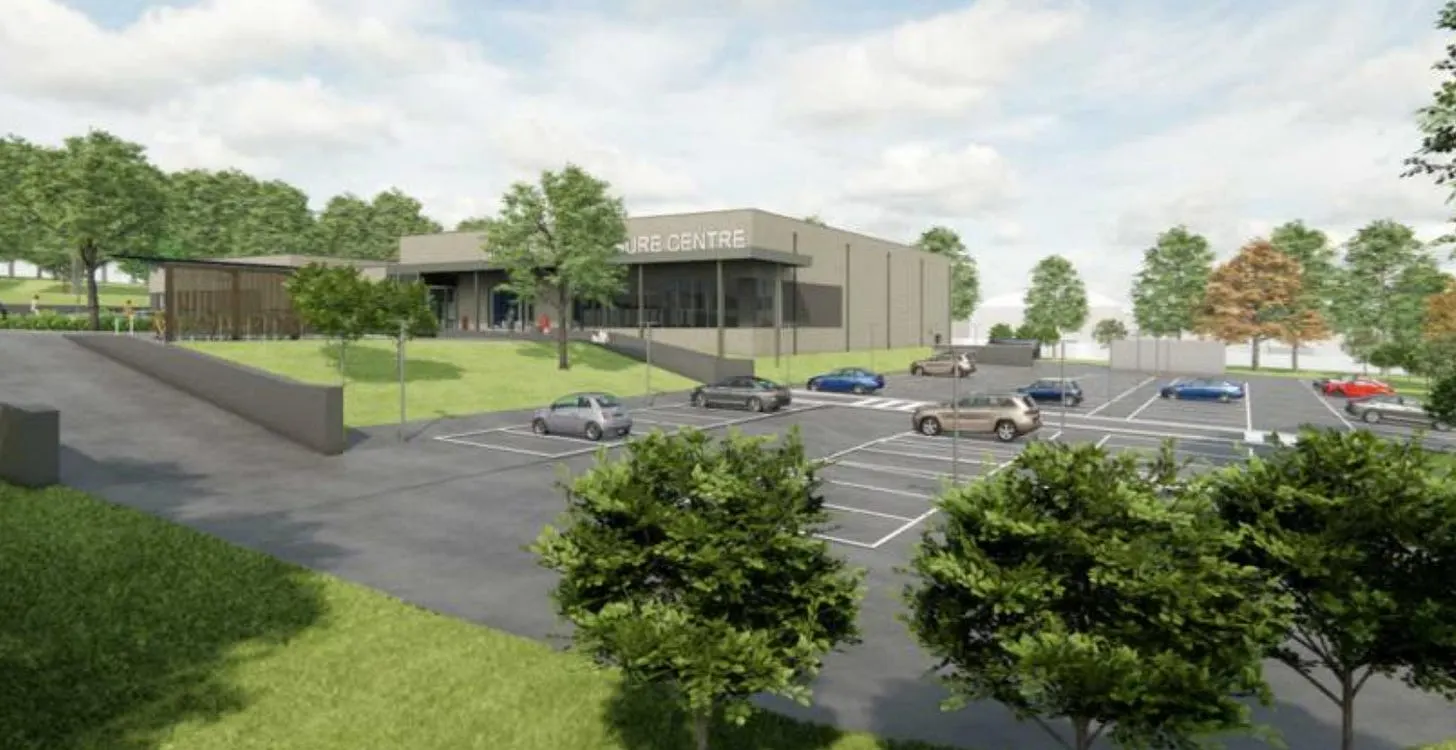
In an effort to make a big early splash (sic), Bradford’s Executive today voted to reject the long-planned Squire Lane Sports and Leisure Facility, turning down officer advice to proceed with a £32.9m scheme despite £20m of secured government grant funding.
The scheme has full planning permission, a selected contractor (Morgan Sindall) and a fixed construction price, but the revised cost of £32.9m would require the Executive to approve a further £5m, including £3.9m of new borrowing.
Presenting the case, Strategic Director David Shepherd told the Executive the scheme addressed “a genuine ingrained requirement” for swimming provision in one of the district’s most deprived areas, warning that rejection would likely mean losing the £20m grant and the £5.4m already spent on design and preparation.
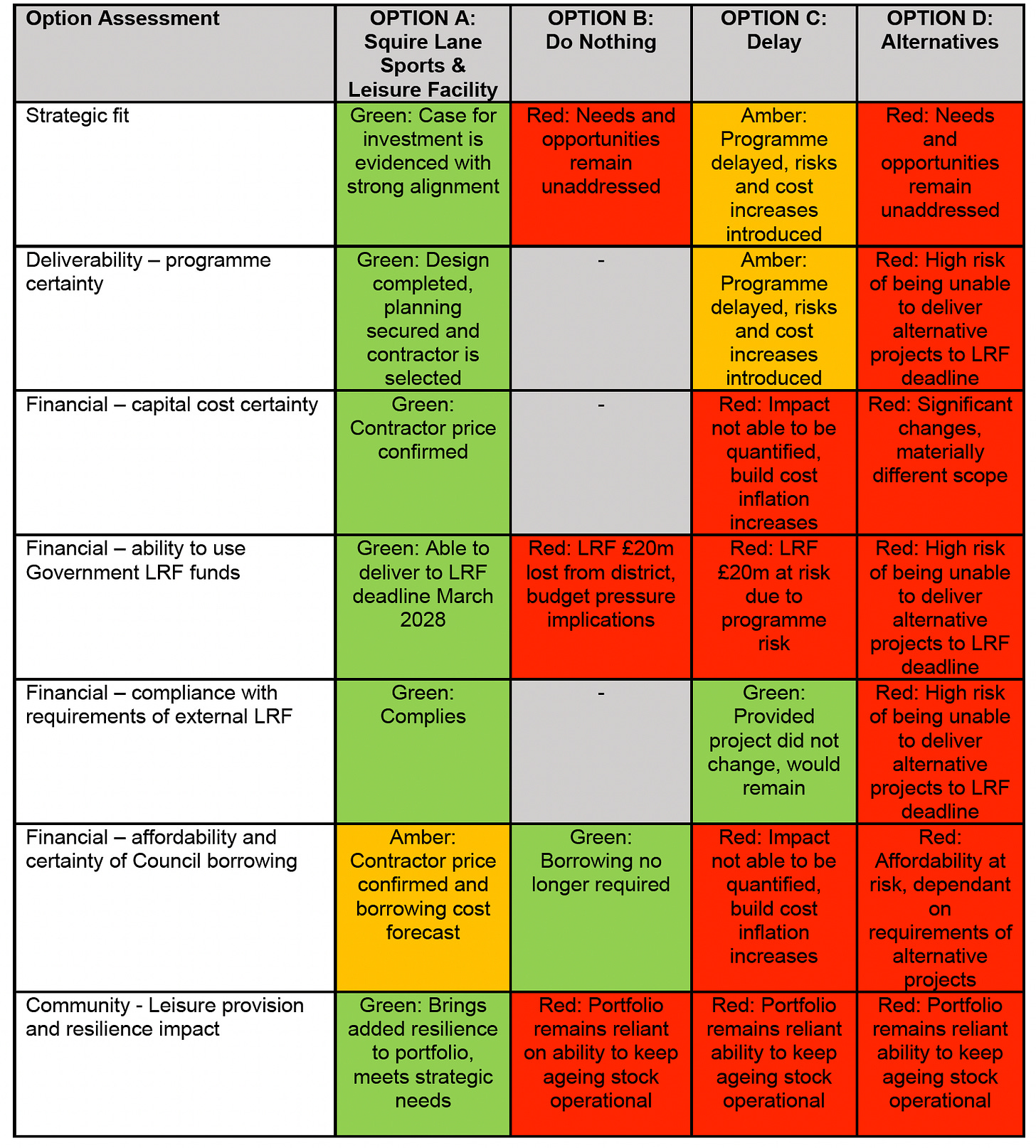
Reform councillor and regeneration portfolio holder Andrew Judson, presenting the Executive’s position, argued the project did not “demonstrate good fiscal management and delivery value,” pointing to the Council’s recent expected early leave from Exceptional Financial Support and citing repeated cost rises since 2019. Asked to confirm the basis for the decision, Judson stated it was “strictly based on financial proposition alone. No other reasons.”
But as you can see from the council officer’s risk assessment table above, Reform has not fully taken into account the wider issues surrounding community investment schemes.
Labour councillor Khan called continued investment “an absolute no-brainer.” Conservative councillor Winnard, by contrast, had already described the scheme as “the wrong development in the wrong place”, likely to become “a white elephant.” Conservative opposition predates this meeting and has remained a consistent theme of criticism of the scheme.
After the vote, Monitoring Officer Jason Field invited Stephen Mair, the Council chief finance officer, to respond. Mair warned the Executive of a possible £5.4m hit to the revenue budget, explaining that “you can’t capitalise it if you don’t have an asset.” This means grant-funded costs already incurred could not remain classed as capital spending if the facility is never built. It also means there is a risk that the sunk cost will be clawed back by central government. Field then asked whether the Executive wished to revisit its vote. The Leader declined: “No. Thank you.”
Likely community response
The rejected scheme was intended to serve a catchment of over 87,000 residents, many in areas identified by Sport England as having the highest unmet swimming demand in the district and among the most deprived in England. Locally, there wasw strong support for the scheme.
Questions likely to follow include what happens to the £5.4m already spent, whether MHCLG pursues clawback of grant funding as warned by Mair, and whether the Council will face renewed pressure over its ageing swimming pool estate — all six of its current pools bar Sedbergh are over 35 years old.
In the meantime, the T&A quoted Khan:
…Reform’s decision to cancel the new pool is a false economy, and it shows exactly what they are about.
It also sends the wrong message to businesses and investors who want to see confidence from the local authority that this is a city looking forward, not backwards, where better public health and regeneration are paramount.