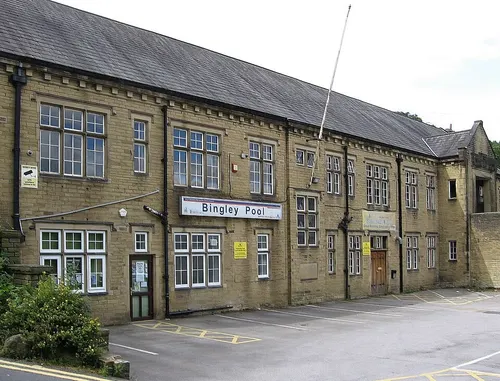


If you want to understand how today’s Bradford Council systematically avoids accountability, don’t look at the spreadsheets. Look at the language. To do that effectively, you have to be in the room, as I was, for the two-and-a-half-hour scrutiny committee meeting covering the recent Executive decision to kill the Squie Lane project.
The raw text of the meeting transcript captured a masterclass in rhetorical boundary-marking, performance art, and tactical language deflation deployed by Council Leader Stephen Place and his Portfolio Holder for Economy, Regeneration and Planning, Cllr Andrew Judson.
When a public authority decides to throw away a £20 million government grant, write off £5.4 million of public money as a dead loss, and leave a deprived constituency without a pool, elected officials have to find a way to defend what to many seems indefensible. They do that by inventing a fresh, evasive narrative.
The “Financial Basis” mantra as a verbal barricade
Throughout his cross-examination, Cllr Judson treated the phrase “financial basis” not as an explanation, but as a protective shield to prevent any critical line of questioning. Does this sound familiar? How about the Trumpian mantra “deny, deny, deny?”
When asked about the devastating impact on local primary school children— in some schools, 90% of children cannot swim the statutory 25 meters—Judson retreated into a repetitive linguistic loop:
“We looked at it strictly from a financial position...”
“Again, this decision was made strictly on a financial basis.”
“However, the again the decision was made on a financial basis only.”
“We made this on a financial basis, a financial basis...”
By repeating the word “financial” like a magic spell, Judson sought to project an image of cold, objective fiscal responsibility. The subtext was clear: anyone asking about children’s health or social deprivation is being emotionally hysterical; only the Executive behaves like an adult.
It’s a perfect play for the Reform UK believers. Others are not so easily swayed.
The bizarre wordplay: decoupling leisure from health
Perhaps the most extraordinary linguistic moment occurred when Scrutiny members pointed out that the Executive’s own reports were dense with public health data.
Judson responded by drawing a bizarre, hard semantic boundary between “leisure” and “health” to excuse the Executive’s complete disregard of the community’s physical well-being:
“Now, when you do the health benefits, now this is not a health centre. It’s a leisure centre. It’s not a health centre. So the health doesn’t go into it. We didn’t consider.”
This is a stunning admission of administrative stovepiping, with all the blind spots that go with it.
By declaring that public health “doesn’t go into” a municipal pool decision, Judson severed the core statutory purpose of municipal leisure services. Under this framing, a swimming pool is merely a liquid-filled container with a balance sheet, entirely divorced from the human bodies that swim in it.
“The Bedside Table Defence”
Recognising that a purely cold, financial defence made them look callous, the Executive deployed a coordinated emotional counter-narrative. I call it the “Bedside Table Defence.”
Cllr Place attempted to elicit sympathy by describing the agonising personal toll the decision took on him:
“Those reports... were on, I think, on our bedside tables for about six weeks. You know, we didn’t take this lightly at all...”
Moments later, Cllr Morgan, Portfolio Holder for Healthy People, echoed the same bedtime imagery:
“I had many sleepless nights over this, and I had the report at the side of my bed looking through it. We have not taken this decision lightly...”
This was not accidental phrasing. It was a calculated, synchronised attempt to shift the focus from the substance of the decision to the decision-makers’ emotional state. The message to the gallery was simple: Yes, we are destroying this community asset, but look how much we have suffered in doing so!
The slippage into brutal realism
Despite the tight scripting, the mask of paternalistic agony slipped. When pushed by Scrutiny members on what the practical alternative will be for the Squire Lane site once the bulldozers are turned away, Cllr Place abandoned the bedside-table solemnity for a moment of raw, dismissive fatalism:
“There’s no plan there... The best thing we believe that we can do with that site is turn it into a car park.”
In that single, unscripted sentence, the entire grand narrative of “managing Bradford’s fiscal emergency with strategic prudence” collapsed.
My Take
Credit must go to Cllr Anna Watson for her persistence in seeking descriptive explanations from Cllr Judson. She soldiered gamely on with pointed questions that addressed the detail, but sadly, to no avail. This is a classic stonewalling Reform play, but one that is rapidly losing its effect. Sooner rather than later, councillors and residents demanding answers will step up the pressure. As they should.
The Squire Lane transcript from the Bradford scrutiny committee meeting reminds me that local government failure is not just about a lack of money, aka fiscal mismanagement by politicians of all stripes. It is about a collapse of language. At times, it requires a suspension of reality.
When the elected councillors making these decisions can look a scrutiny committee in the eye and declare that “the health doesn’t go into” a public leisure centre, the battle for a community’s regeneration, health and wellbeing is already lost.
The language had prepared the ground for the concrete. The pool is gone; the car park has won. The subtext for that? Get over it, we’re moving on, and so should you.