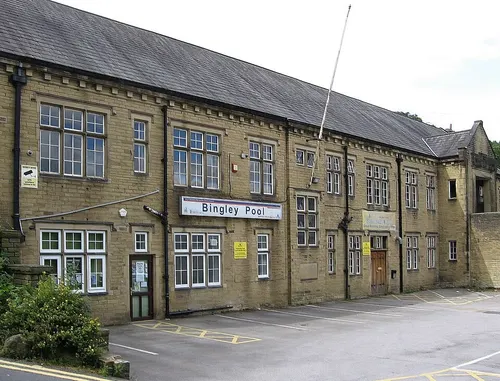


It’s confirmed. The Squire Lane project is well and truly cancelled. Local residents might get a car park instead. What happened?
When the Bradford Council Executive decided to scrap the Squire Lane project, there was a sharp intake of breath among opposing councillors. A request to call in the decision for the Regeneration and Environment Overview and Scrutiny Committee followed.
At the conclusion of yesterday’s two-and-a-half-hour meeting, Reform and Conservative councillors voted to allow the decision to stand, with a notable postscript. It was a tight vote. For all practical purposes, the project is dead - but not quite buried.
If that is all you wish to know, then click away now. If you want more colour and a better understanding of how transparency and accountability are now a full-blown joke at Bradford Council, then read on.
Yesterday’s sweltering atmosphere in Bradford Council committee room 1 was not only a matter of the summer heat; it also reflected the climate of a high-stakes political showdown. The Regeneration and Environment Overview and Scrutiny Committee served as the arena for a closely fought, deeply polarised battle over the future of the £32.9 million Squire Lane Sports and Leisure Facility. Designed as a state-of-the-art, gas-free health hub to serve 87,000 of the district’s most deprived residents, the project instead met its final demise on a razor-thin, party-line vote.
Impartiality vs. the party whips
Scrutiny Chair Cllr Susan Fricker opened the session with a direct plea to the nine committee members, reminding them that they were there to act as an impartial “critical friend” to the Council Executive, separate from ward and party politics. But as the cross-examination began, the political dividing lines hardened almost immediately.
Call-in members Cllr Rizwana Jamil, with support from Cllr Kamran Hussain, delivered impassioned speeches warning against the “managed decline” of Bradford West—a district with severe health inequalities where local primary school children suffer from a near-total lack of swimming facilities. Cllr Hussain noted the divisive message sent by cancelling the only planned pool in the district’s South Asian community:
Speaking about unity and actioning unity are two different things.
The smoking guns
The real drama unfolded when the Executive was forced to justify why they rejected the written, professional advice of Steven Mair, Chief Finance Officer, and David Shepherd, the Strategic Director for Place, both of whom had formally recommended proceeding with the project.
Mr Shepherd was clear that while his team had taken a conservative view of the project, there was no guarantee that the project would come in at what is now an inflated figure of £32.9 million. Under intense cross-examination, Executive members offered defences of shocking bluntness.
Cllr Andrew Judson, the Portfolio Holder for Economy, Regeneration & Planning, admitted that the Executive completely sidelined public health, stating:
“This was on a basically on a financial basis. It was not on health quality basis... this is not a health centre. It’s a leisure centre. So the health doesn’t go into it. We didn’t consider.”
When pressed on what alternative strategy existed to address Bradford’s statutory primary school swimming failures, Council Leader Stephen Place was equally dismissive:
“No plan there... The best thing we believe that we can do with that side is turn it into a car park.”
The procedural bait-and-switch
The committee’s final division gave us a masterclass in constitutional gatekeeping. Chair Fricker first tabled a motion to refer the cancellation back to the Executive, arguing they had erred by ignoring officer advice and local social value. That would have required the Executive to weigh a welter of health and well-being issues that were part and parcel of Mair and Shepherd’s recommendations and the subject of most questions raised in the committee meeting. That motion failed on a tight 5–4 split—split strictly along party lines, with the Reform and Conservative majority voting to kill the referral.
With the referral defeated, the committee turned to releasing the decision for implementation. Cllr Davies attempted to claw back some community protection by attaching three binding “conditions”: utilising Clean Air Zone (CAZ) funds for school swimming transport, establishing alternative pool partnerships (such as the University of Bradford), and exploring free food provisions to support swimming abilities.
Monitoring Officer Jason Field immediately squished that idea. He ruled that under the Council’s Constitution, Scrutiny cannot impose legally binding conditions on a release. Instead, the conditions were legally defanged into non-binding “comments for the Executive to note.”
The razor-thin vote
With the “conditions” reduced to toothless observations, the committee held its final vote to release the cancellation. The final vote was 5–3 (with 1 recorded abstention). It was a narrow victory for the Executive, leaving local families with a cancelled project, an empty site, and three non-binding comments that the Executive had no legal obligation to act upon.
My Take
Cllr Fricker did a sterling job of keeping councillors in order, preventing political posturing from entering the debate. Any observer would be hard-pressed to see this committee meeting as anything more than a proper and fair question-and-answer session. Tough questions were asked, but almost all came with respect for officers and elected councillors alike. That is to be commended.
When we spoke immediately after the meeting, Cllr Fricker said she was satisfied that everyone who wished to do so had their opportunity to be heard. Sadly, the democratic arithmetic did not favour an outcome that the Executive could have taken forward without losing any political face. Unfortunately, that’s not how it works in Reform land. I’ll explain why in a later story. What’s more, there is a real possibility that Reform councillors are creating risk. More on that in another post.
In the meantime, has anyone else caught a whiff of an incoming GFY moment?