

‘Thick as mince’ is how former Bradford councillors are reacting to local Reform leader Stephen Place’s claim that his group will not scrap Bradford’s Clean Air Zone (CAZ) but will stop charging for it as a boost to business. Unsurprisingly, Reform got the nod for such a move from Tory councillor Geoff Winnard:
We all want clean air, but we’re not convinced that charging older vehicles to come into the city centre is a good idea. It’s made many of them move out into the rural roads and cause a lot of problems there.
These sweeping statements sound great, chime with local sentiment and play straight to today’s vibe-driven politics. The reality is more nuanced.
I lived on the main road in one of the villages in Winnard’s ward. There were plenty of traffic-related problems. My first-hand experience says that most of those issues were concentrated at school run times, with competition between school buses and parents picking up children. Today, I live in a different village, and there are plenty of traffic problems here, but these are more to do with traffic concentrations along the moorland routes between Bradford city and the villages during morning and evening rush hour. I cannot recall the last time I saw HGVs in my area.
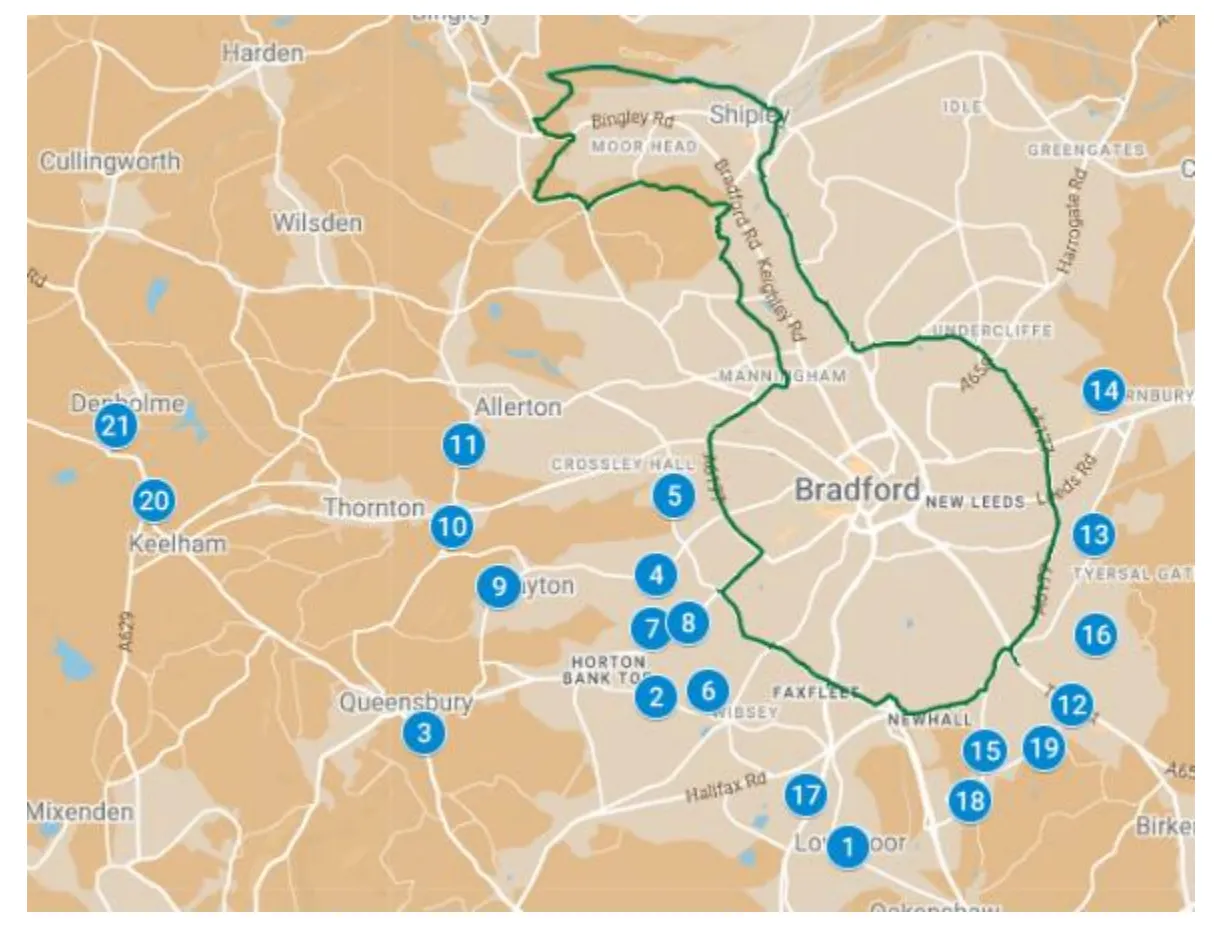
A traffic displacement monitoring study conducted across 21 sites by Bradford council found that:
The traffic counting undertaken outside the CAZ to ascertain if displacement is occurring indicates the following;There is no significant increase in the % of commercial traffic on displacement routes outside of the Clean Air Zone following introduction of the CAZThere is a reduction in the overall traffic volumes counted at East Morton compared with data collected by DfT in 2019 These metrics indicates that there is no displacement of commercial vehicles occurring as a result of the introduction of the CAZ
While there was sporadic anecdotal evidence of adverse impact on business, I cannot find any evidence that CAZ caused the kinds of economic problems Reform imagines but does not quantify in any meaningful way. Separating CAZ impact from roadworks disruption, pandemic recovery, and the broader structural weakness of Bradford's retail offer (pre-dating CAZ by years) is genuinely difficult. No robust Bradford-specific footfall study isolating CAZ as a variable appears to have been published.
What’s worse, Reform’s analysis is dishonest. It ignores the net health benefit of some $180 million assessed independently by the Centre for Health Economics at the University of York. Even if you CAZ-wash past the health issues, any notion that a Reform-led council can get rid of charging is nonsensical and ignores why charges were raised in the first place. Green Party council leader Matt Edwards said:
The whole purpose is to reduce the number of the most polluting vehicles entering the city centre. Without enforcement it simply will not work.
Exactly!
Place tried to make the case that Bradford is an exception that warrants revisiting, as other councils, such as Leeds and Coventry, successfully resisted the introduction of a CAZ in their cities. While it sounds like a great political jab, it misses the point. Bradford negotiated the Class C option, which avoided the nuclear option of a ULEZ-style Class D, in which all cars entering the zone would need to be compliant. It also offered generous grants to help taxis and commerical vehicle convert to cleaner vehicles during a transition period. That’s a business-specific win Place cannot ignore.
The reason Bradford has a charging environment is enshrined in national law. It may be convenient to pretend that Bradford council under Labour was somehow awful in imposing Class C CAZ. But he can’t get past the fact that Bradford’s air quality was so bad, the then Tory government said in negotiations, the legal equivalent of nice try, but no cigar (sic.) Today, the government would need to agree to the removal of charges and grant a revised Direction, which would require demonstrating an alternative credible route to compliance. Is there one? If so, then it is yet to be revealed. Reform would also have to explain how it plans to fund safety and other socially equitable projects that benefit from CAZ charges. Again, no thought has been given to this issue by Reform or its leader. Or if it has, then it has not been made public. More likely, the new Reform councillors have little to no idea how public funding works.
In the meantime, let’s call Place’s argument what it is: political posturing on a single oven-ready topic that Reform has little hope of delivering any time soon. It’s vibe politics that almost always fails on contact with reality. Thick as mince? Probably.