
Public safety and anti-social behaviour are top of mind in most of the UK, and no more so than in Wyke, Bradford, where newly elected Reform councillor Ian Reed thought it common sense to float the idea of Neighbourhood Rangers. In an Instagram post dated 8th June inviting the public to attend, Reed claimed that the 20th June meeting would include representatives from West Yorkshire Police. Fast forward to 24th June and Reed went one step further, declaring that:
Neighbourhood Rangers are not about replacing the police or existing services. They are about strengthening community partnerships, improving communication, increasing visibility, and helping tackle the everyday issues that matter most to local people.
We know there is work to do, but we are committed to making this happen.
The support and enthusiasm shown at the Wyke Business & Community Forum demonstrated that residents and businesses share the same vision:
A cleaner, safer, stronger Wyke where anti-social behaviour is challenged, businesses can thrive, and communities work together.
We look forward to continuing conversations with residents, businesses, community organisations, and partners as we develop this exciting initiative.
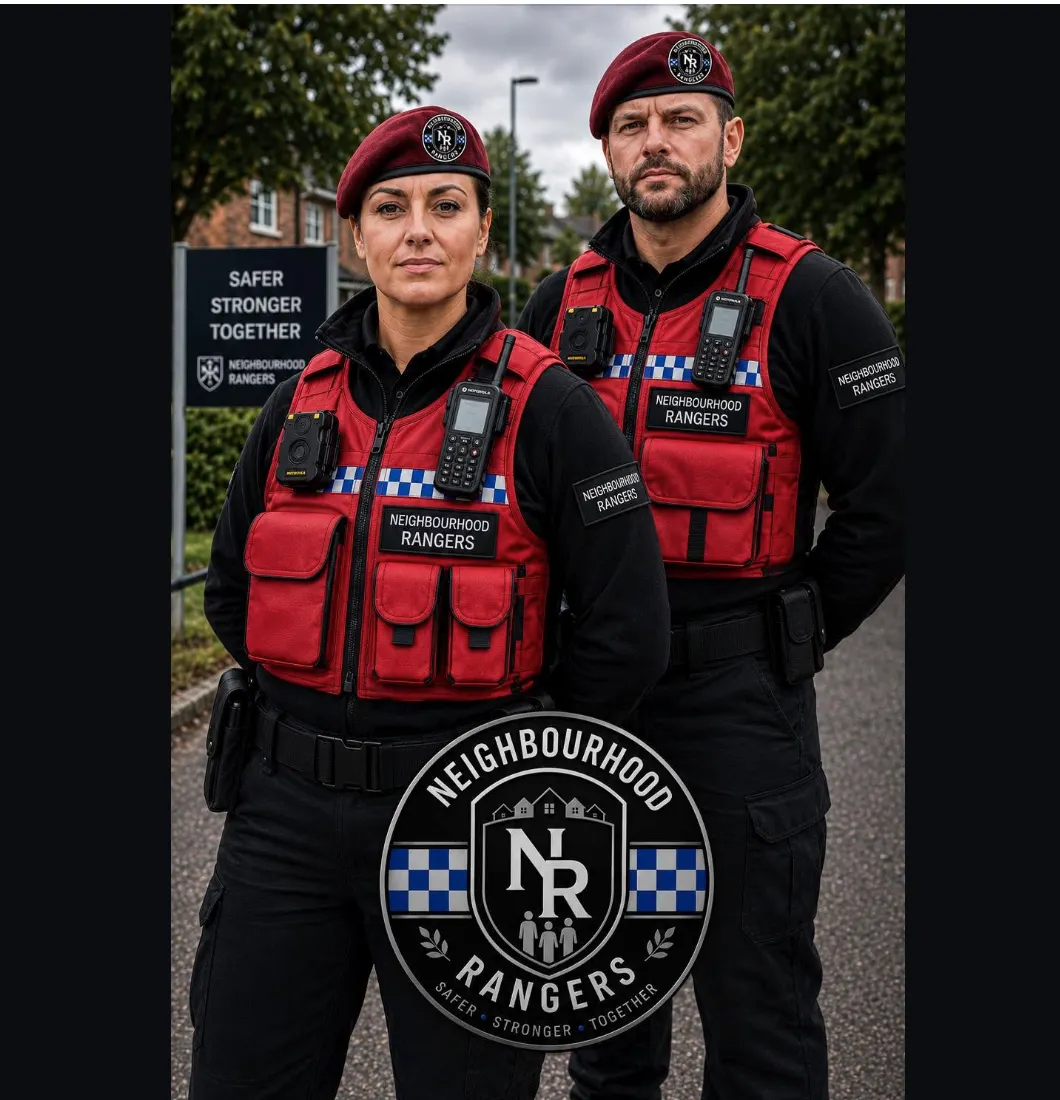
The post, like all of Reed’s Facebook posts, was accompanied by a slick AI-generated image. This caught my attention because it showed a ‘photo’ of people attired in ‘Sillitoe tartan ’, a highly regulated form of uniform unique to the police. See the image at the top of this post.
Reed may not be aware, although I would expect minority Reform-led council leader and ex-policeman Stephen Place to be cognisant that under Section 90 of the Police Act 1996, it is illegal to look like a police officer or have an "article of police uniform" without a lawful reason. Because the chequered band is a recognised "distinctive mark," wearing it on a high-visibility vest or cap can lead to arrest for impersonating a police officer.
So imagine my surprise when it turns out that the police were not present at the 20th June meeting due to short notice and appeared wary of an initiative inquiry that risks vigilantism. From a Freedom of Information request I sent to West Yorkshire Police, the reply to which is dated 17th August:
The force confirmed it holds no record of any application for Community Safety Accreditation Scheme (CSAS) status — the statutory route by which a scheme of this kind could be granted any formal enforcement role. Absent CSAS accreditation or council authorisation, a Rangers scheme could lawfully act only as extra eyes and ears for the community — reporting concerns, not enforcing anything.
Correspondence disclosed alongside the FOI response shows the scheme’s proposer emailed the force on 2nd June, under the subject line “Wyke Rangers,” asking for its views. That view had not been given by the time the promotional material implying police backing was published.
The force withheld the underlying scheme proposal itself. If it is anything like the laundry list included in Reed’s post of 24th June, then I am not surprised. Commenters on the post were quick to point out the flaws of Reed’s proposals. This comment on the post from Joy Lynch encapsulates concerns:
What powers will you have, anyone can conduct a citizens arrest but how will it work in practice? Sorry but this is wrong on so many levels. It is purely Vigilantism, has this worked anywhere else in the UK? Roaming the streets looking for trouble but what happens when its found? This in itself puts your 'protectors' at risk - the legality of it is a grey area. If you are not happy with the service you are provided by the Police do something about that!
The police, in their own way, seem alive to the same risk. In withholding the scheme proposal, they cited a risk that disclosure could prompt the public to take enforcement into their own hands — warning of “unlawful or vigilante behaviour.” That’s their own risk assessment of what publishing the document might trigger, not exactly a ringing endorsement of the scheme either.
There is a further twist to this story. Cllr Reed shares Wyke with Cllr Ian Walker, an Executive member who holds the Neighbourhoods and Communities portfolio. This type of activity should be at the heart of his portfolio responsibilities. He has been conspicuously silent on the matter, as have Reed and Wyke’s other Reform councillor, Adam Thompson-Day.
I approached all three councillors for comment on the same day as I received the FOI reply. As at the time of publication, I only hear…crickets.
In the meantime, I’m sticking with the well-organised, well-run and reputable Neighbourhood Watch scheme. It is not perfect but works well enough and is widely supported in the Bradford area by dedicated activists. Perhaps the Wyke councillors might consider talking to those folk before dreaming up fantasy schemes that cause immediate concern among residents and have the whiff of Stasi tactics.