
Last evening's scrutiny committee, tasked with quizzing officers about £50 million in proposed cuts, left many questions hanging on the accounting equivalent of 'it all depends'. Councillors sought assurance that the impact on frontline services, especially those delivering children and adult services, is minimised. But be in no doubt, there will be losers as service costs to some residents rise while headcount is reduced, with as many as 99 staff facing redundancy.
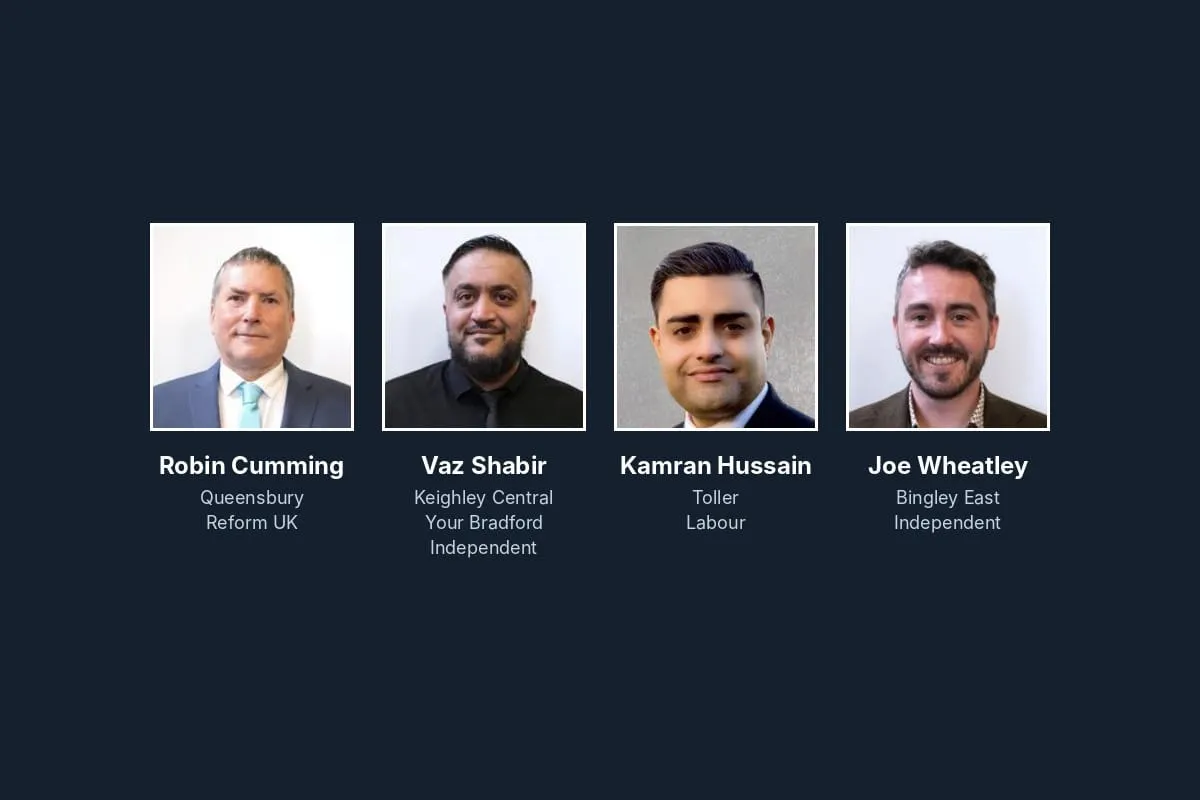
Committee chair Robin Cumming opened proceedings, asking how confident officers are in delivering the planned savings. Steven Mair, chief finance officer and the person tasked with signing off the final budget, said that he is "confident in the round" but that there will inevitably be "ups and downs." That answer wasn't good enough for Cllr Vaz Shabir and Cllr Kamran Hussain, who both raised questions about the detail and came away largely empty-handed.
Nearly two-fifths of all the savings, or £18.8 million, fall on the Bradford Children and Families Trust, which runs children's social care. The plan is to keep more children safely with their families, move some out of very expensive residential homes into foster care, and bring the average cost of a placement down from about £7,600 a week to £7,000. A new home for children with complex needs is part of it.
Cllr Vaz Shabir is especially concerned that equality impact assessments remain 'provisional' and questioned how the council could be expected to wave through large savings without clearing up "acknowledged evidence gaps". Shabir went on to press officers about 'what-if' scenarios that require increased provision, but there were no concrete answers on this point.
About £6m comes from adult social care. Part of that is from charging. People who pay towards their care are allowed to keep a minimum amount for living costs, and the council is removing the extra buffer it used to allow on top. Officers said that brings Bradford in line with most councils. Cllr Kamran Hussain asked how many disabled and older residents will end up paying more. Officers couldn't say, and promised the figure later.
Another £2.2m comes from reviewing people's care packages and disability transport. Officers insist each review starts with no assumption about the outcome. Pressed by Cllr Shabir, the officer in charge said: "We've got a global target ambition." A target and an open mind don't sit easily together.
The council's area offices are, as Cllr Hussain put it, the front door for local services in many neighbourhoods. The plan takes £700k out over two years. Hussain, who previously held the portfolio for this area of responsibility, said that in March the council had called a cut this size catastrophic, and asked what had changed. Officers said that the evidence needed to support the reduction was now clear.
Along with Shabir, Hussain pressed officers about consultation on 39 out of the 42 proposals. Of the 42 changes, only three, worth £3.58m, are out for public consultation. The other 39, worth £46.42m, were approved by the council's Executive on 3 November without consultation. Mair said residents can comment on the whole package.
Shabir also pointed out that the council's own checks on how five of the cuts affect disabled people, older people and other protected groups are unfinished. They will be completed "alongside implementation", which means as the cuts happen. The answer was that the checks will be "kept under continuous review".
As a declared union representative, Cllr Joe Wheatley wanted to get clarity about the proposed redundancies, noting that 20 to 99 is a very broad range. Mair argued that this was HR practice to offer a range, but that still leaves the question of where those roles will be lost and, alongside that, why agency staff are still needed. After some pressing on this point, officers said the main areas are older people's services, where services are being streamlined, and adults with disabilities, where a recent court ruling means fewer deprivation of liberty cases will need them. Numbers are “still to be determined”. Elsewhere, limited redeployment out of business support had already reduced the need for two staff. On agency staff, Mair pointed out that councils throughout the country always have some need for agency staff.
My Take
This committee meeting was the first opportunity for councillors to dig into the numbers. They asked the right things. In a district where poverty is never far from the surface, they led with the people who'll feel these cuts: those paying for care, families relying on neighbourhood offices, older people who struggle online, and disabled residents hit by several changes at once.
The problem is what came back. None of the officers could say with any certainty how many people will pay more, and it is unclear what the combined effect will be on the most vulnerable. Perhaps more worrying, there's no plan B if the government's anticipated fair funding settlement falls short. I got the impression that Mair is quietly confident but, like all good number crunchers, he caveats everything with 'it all depends' type answers. The good news here is that during his time as chief finance officer, Mair has driven massive savings plans and speaks with a quiet confidence that suggest something of a steel fist inside a velvet glove. In that sense, I hope he remains in post to see his work come to fruition.
The debates are not over. The Executive still has to take individual decisions to put many of these cuts into effect, and councillors can "call in" those decisions. That pauses them and forces the Executive to justify them in public. The Executive meets on 1 December and 26 January. Once Full Council sets the budget on 24 February, that door largely closes. One councillor told me he confidently expects many opportunities for call-in. We shall see.
In the meantime, residents can raise questions and provide feedback on any of the proposals. Last year, the level of public response was poor. This year?