

There is a particular kind of council victory that looks total on the night and turns out to have been a trap the victors built for themselves. Bradford’s extraordinary meeting on the grooming-gangs inquiry was one of those.
The headline is simple, and it is the version that has travelled: a Conservative motion, with Reform folded into it, carried the chamber almost unanimously. Labour abstained. Two groups delivered; one sat on its hands. If you read only the result, you would conclude the opposition had a bad night and the new administration a good one. And all those who wanted rid of the past administration see themselves as thoroughly justified on one of the most consequential issues that Bradford council has faced.
While some Conservative councillors are jubilant, the result is the least interesting thing that has happened. The result conceals a piece of procedural choreography that, when you pick it apart, reveals the apparent winners walking into political problems they will live with long after the applause has faded.
The question had already been answered.
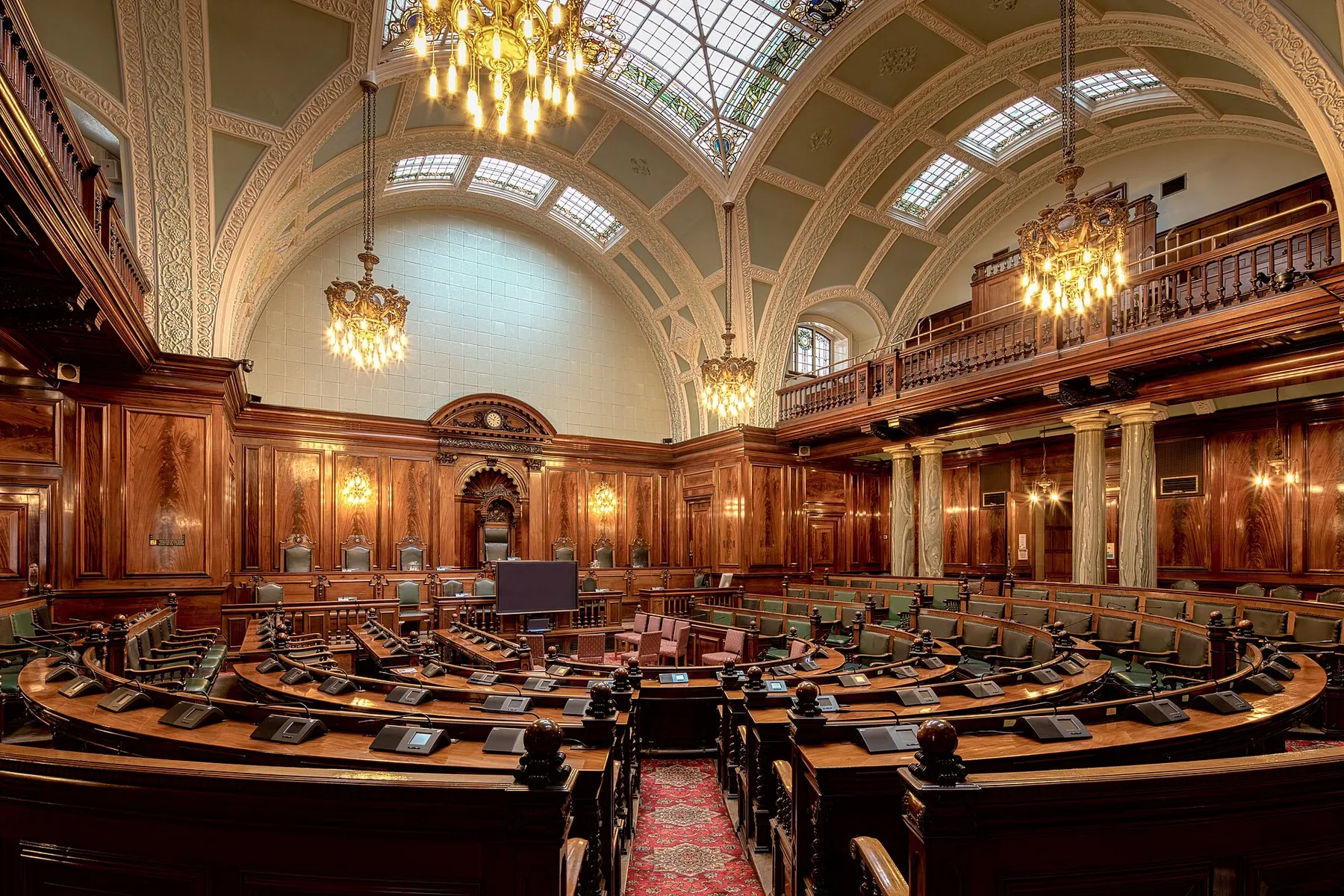
The meeting was originally called to table a Conservative motion demanding that Bradford and Keighley be included in the national grooming gang inquiry chaired by Baroness Longfield. That was a bit odd as the council leader had already requested inclusion as one of his first acts after the May elections. But on the morning of the meeting, the inquiry confirmed the district’s inclusion. By the time councillors rose to speak, the question on the order paper was already settled. So what was the point of a full council meeting?
With inclusion secured, the only live disagreement was over the wording of a binding resolution — specifically, whether to include historical political blame in it before an inquiry that has yet to report a single finding. Everything that followed was a political brawl over that point, dressed in the language of a fight about the inquiry itself.
The merge
While the Conservatives had tabled the motion, Reform wanted in on the action and tabled an amendment. Rather than have the chamber choose between them, the Conservative mover proposed to fold the Reform amendment into the Conservative motion, creating a single combined text. Reform agreed.
On the surface, this looked like unity — two groups setting aside differences to speak with one voice as a clear signal aimed at bringing the chamber as a whole together. But look again at what each side contributed to the merged text, because this is where the trap is laid.
The Conservatives brought the story: the years of campaigning, the named survivors and MPs, the historical charge of prevarication and avoidance against the previous administration. That is their property, built over a long time, and on the night it was the emotional centre of the debate. Reform brought process: a set of forward-looking resolutions — a review of past recommendations, a cross-party oversight mechanism, survivor involvement in shaping the council’s response: genuinely useful governance content, and the only actionable local material on the paper.
But process is detachable. Anyone can claim credit for proposing a review. A multi-year campaign cannot be borrowed. So when the two texts merged, the Conservatives merged the cause, and Reform merged the admin — and Reform got to stand inside a narrative it had no part in building.
Hang on. This wasn’t just the Conservative and Reform show. There are plenty of other parties represented, led by the Labour group that formed the previous administration.
What Labour did — and it is on the record.
In the run-up to the meeting, my soundings suggested that Labour was likely to deliver a ‘we agree’ speech demonstrating active support for what Bradford clearly wants. That’s not quite what happened.
As noted above, Cllr Birch, the leading Reform speaker, was at pains to offer a forward-looking, politically neutral position—an interesting and helpful start.
The core difficulty for Labour was that the Conservative motion contained language designed to apportion blame to the previous Labour administration. Still, it was based on an unstarted inquiry with evidence that had not been independently weighed. It got decidedly sticky when the Conservative seconder, Cllr Sullivan, made pugnacious and questionable remarks, which the LibDems corrected almost immediately.
Labour leader Cllr Khan did his best to argue for removing the politicised elements embedded in the motion, but to no avail. The political issue was not lost on the Greens, LibDems and Bradford Independents, all of whom made speeches signalling a strong desire to move forward. Cllr Edwards (Green) stood outside the scrum, quoted victim and campaigner Fiona Goddard against all sides (“no MP can take the moral high ground by using CSA for political gain”), credited Reform’s local-action resolution honestly, and turned “men should listen more” into a rebuke to everyone. Conservative councillor Ahmed made an impassioned speech that reminded the chamber of shameful conduct in a 2024 debate where she was verbally abused in the chamber.
Khan moved to adjourn the meeting to find a form of words the whole chamber could carry unanimously. That motion was defeated by a margin of two. Labour then put forward its own amendment, stripped of partisan framing, focused on victims and the council’s commitment to the inquiry. That fell by the same two votes.
Only when both routes were closed did all of Labour’s members abstain on the final motion. As Khan said: “We have no choice.”
You can argue about whether Labour’s amendment rewrote history in its own favour. Its opponents made sure that didn’t happen, and for good reason. But the sequence on the night is not in dispute: the group most loudly accused of dragging its feet was the one that twice tried to move to bring forward a motion everyone could vote on, and was refused both times by a chamber that was faced with the contested version as the only option on the table.
The 62-1 vote, and why it cuts both ways
The substantive motion carried overwhelmingly — all but a single vote against, with Labour abstaining as a bloc.
It would be easy, from the Labour benches, to present that abstention as a clean principled stand. It is not that simple. A near-unanimous result is a gift to Labour’s opponents: (almost) every other councillor in the chamber backed this motion, and only Labour refused. On a child-protection issue, that is a headline that writes itself, and it will be used as the occasion demands. Labour cannot claim the chamber was divided about the motion. It was not. The chamber was overwhelmingly for it, and Labour stood alone outside. That is the cost of abstention.
But here is what the 62-1 vote also does, and why the apparent winners should be less comfortable than the number suggests. An overwhelming vote means everyone except Labour took ownership of the motion — Greens, LibDems and Independents included, several of whom spent their speeches criticising the very text they then voted for. The motion did not pass because it was good. It passed because, once the consensus route and the clean amendment had both been killed, there was nothing left on the order paper to vote for except the partisan version. The chamber was, in effect, manoeuvred into near-unanimity rather than persuaded into it. That’s how politics works.
But it is that manoeuvre that sets up the future problem.
The bill comes later
Consider where each of the apparent winners now stands.
Reform spent the evening looking like a co-author of a popular motion. But on the operative resolutions — the parts that actually bind the council — it was established that where the merged texts conflict, the Reform wording takes precedence.. So Reform’s content is doing the real work, inside a motion that carries the Conservative name and rests on the Conservative story.
Reform got the appearance of authorship; the Conservatives kept the equity. In a chamber where the Conservatives hold the institutional memory and Reform is the newcomer, that is not a partnership of equals. It’s a debt. Reform stood inside someone else’s narrative, on someone else’s history, and contributed the paperwork. Favours of that kind, in local government, get called in. That’s how politics works. They are the unspoken payload of deals done in the corridors and committee room corners of City Hall.
The Conservatives, for their part, won the night by making the motion impossible for Labour to support — and in doing so, made the “Labour refused” line indelible. But a win secured by foreclosing consensus is brittle. The Conservatives had achievable unanimity on a child-protection motion within reach, and chose the contested version instead. That choice is now on the record, available to anyone who later wants to ask why, on this of all subjects, the chamber could not be brought to speak with one voice when one group was visibly trying to make it happen while others were not. The idea that in this situation, ‘it’s my way or the highway’ never sits well in the long run.
And the inquiry itself — the thing all of this was supposedly about — now begins its work in a district whose council has already, by formal resolution, gestured at who was complicit and who aided and abetted, before the inquiry has examined a single file. If Baroness Longfield’s findings complicate that story, the motion that passed 62-1 will not look like foresight. It will look like a chamber that pre-judged. That is a dangerous strategy. The history behind this story runs decades, and long before any of the current councillors were elected to the chamber and many years before the most recently ousted administration was in power.
The dance, and who actually reads it
None of this is visible in the result. That is the point of the choreography: a 62-1 vote photographs as consensus and consensus photographs as victory. The social-media verdict on the night credited the Conservatives and Reform with a win, and on the raw arithmetic, who could argue?
But the people who actually have to govern the district for the next few years were in the room, and they can count. They saw a motion that needed two procedural kills to reach near-unanimity. They saw which group brought the story and which brought the filing. They saw an opposition that tried twice to make the thing cross-party, and both attempts were voted down. The irony is that Reform speakers were at pains to push aside political differences.
The impression of a debate won and lost will fade. The arithmetic of who owes to whom, and who pre-judged what, will not. In the future, on the arithmetic, Reform will need every one of its own councillors and the entire Conservative group of councillors to vote in its favour to ensure winning substantial motions and votes. That’s not a given.
That is the difference between winning a vote and winning the argument. On 24 June, two groups won the vote. It is not at all clear that they won anything else.